Holiday home pricing: what works and what does not.
Pricing is the one part of letting where you can change something in a minute and see the effect tomorrow. It is also the part most owners touch least. A fixed summer price, a fixed winter price, and hope for the rest of the year.
Why a fixed price is always wrong
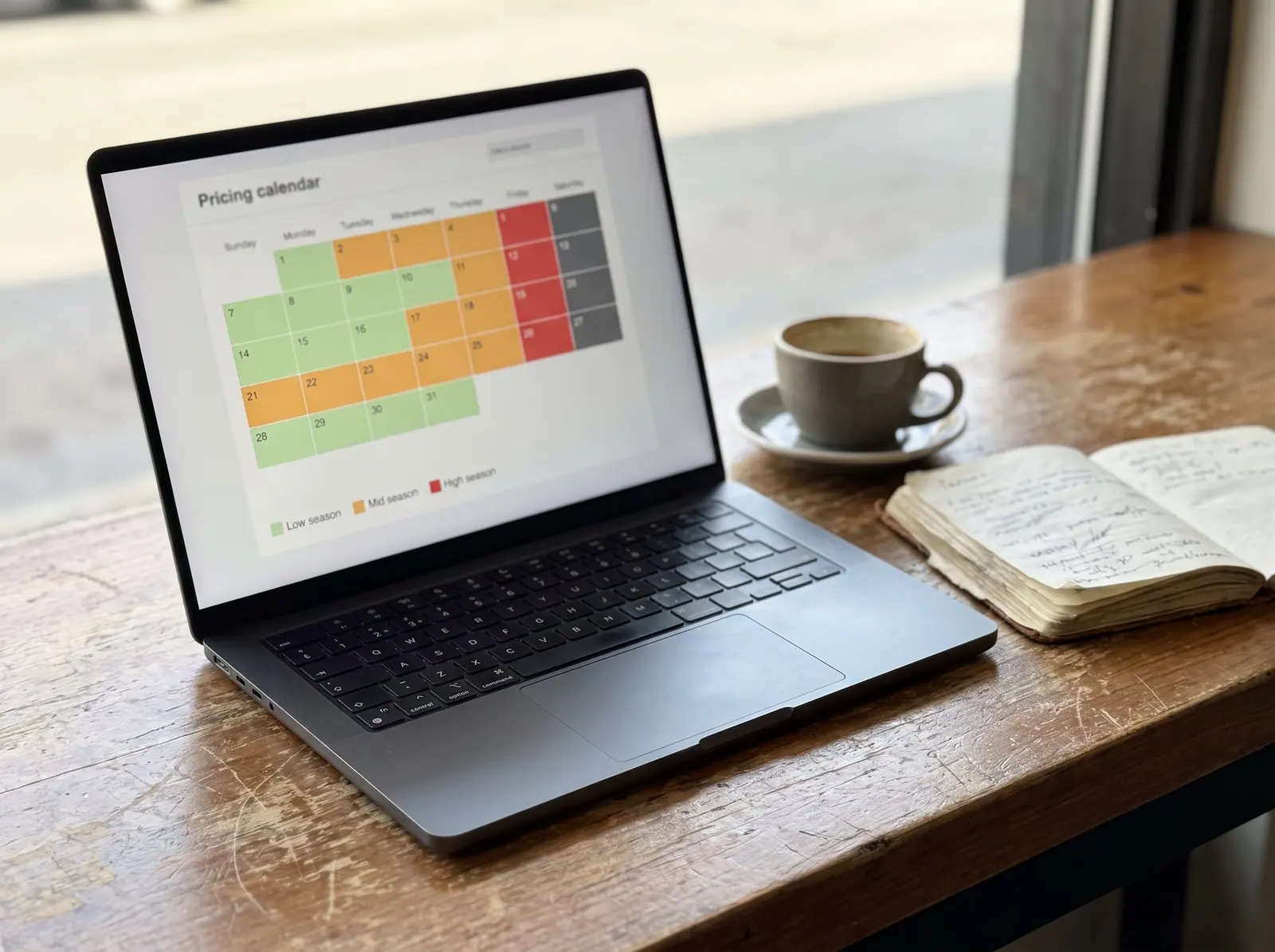
If your price is the same all year, it is by definition only right for a few weeks. In peak weeks you leave money behind: those weeks fill anyway, also at a higher rate. In quiet weeks you are too expensive and the property sits empty while costs run on.
The odd thing is that correcting it earns money in both directions. Dearer in the peak earns more per night immediately. Cheaper in the troughs earns nights you would not have had at all.
Price by how far out the date is
A week three months away has plenty of time to fill. Ask what you like. That same week, ten days out and still empty, is a different product: the odds of someone booking at that rate are slim.
A simple approach: from three weeks before arrival you step down, and in the final ten days you accept that half a price beats an empty house. An empty night earns nothing, and that night does not come back.
Let your minimum stay move with it
Price and minimum stay belong together. In high season you want long stays, because your cost per night drops and your calendar does not fragment. In low season you want to take everything, including two nights.
Watch for gaps of one or two nights between bookings. Those almost never fill at the normal minimum. Lower the minimum there specifically, or accept them as lost and schedule your cleaning into them.
Cleaning fee: separate or included
A high cleaning fee on top of a low nightly rate looks bad on short stays, because the guest sees the total. On long stays it barely matters.
If you mostly get short stays, it often pays to fold part of the cleaning into the nightly rate. The total stays the same, but you stand out better in a result list sorted by price.
Look at what is available, not at what is advertised
Many owners compare their price to the neighbours. That is the wrong comparison, because you are also looking at properties that have sat empty for months at a fantasy rate.
The useful question is: what is still free for that date, and what are those properties asking? If ten flats in your street are still free for next week, that is a different signal from being the last one left.
- •A fixed annual price is almost always too expensive and too cheap at once.
- •Step down as the date gets closer and the week is still empty.
- •Long minimum stay in summer, short in winter.
- •On short stays the total matters, not your nightly rate.
- •Compare with what is still available, not with what is advertised.
Frequently asked questions
We review your property and your listing and tell you honestly what could be better. No obligation, no cost.
How to maximise your holiday home income.
Most owners try to earn more by raising the nightly rate. That is almost never where the money is.
Read onTen mistakes that cost holiday home owners money.
Ten things you can check in half an hour that together easily add up to a few thousand euro a year.
Read onWhat the best hosts do differently.
The best performing properties are rarely the prettiest. They are the best organised.
Read on